
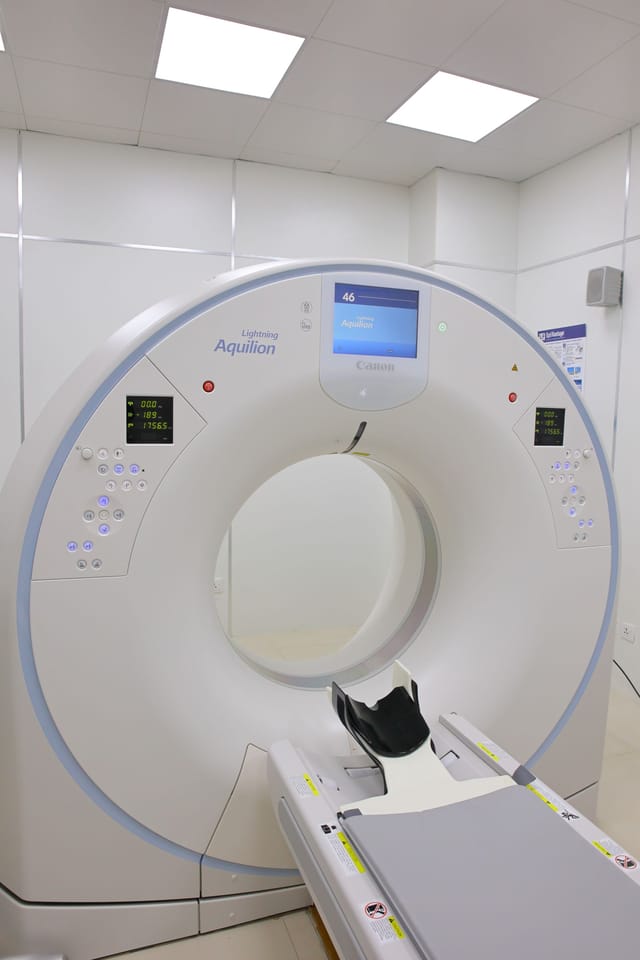
CT imagingdetailed pictures of the heart's arteries.
A CT scanner takes cross-sectional X-ray images that can show the coronary arteries, calcium in their walls, and the large blood vessels of the chest.
Hospital referral
At a glance
- How long
- 15–30 minutes
- Preparation
- As the imaging centre advises
- Results
- At a follow-up visit
- Where
- Hospital, by referral
Why it might be recommended
Every test is chosen to answer a specific question. These are the most common reasons for this one.
- Chest pain, where narrowing of the heart arteries needs to be ruled out
- Calcium scoring, to refine your cardiovascular risk
- Looking at the aorta and other large blood vessels
- Questions a stress test or echo could not answer
What happens
Referral
If CT is the right test, a referral is made to an imaging centre and you are told how to prepare.
On the day
A small cannula may be placed in your arm for contrast dye. Some people are given a tablet to slow the heart for sharper images.
Scanning
You lie on a table that moves through a ring-shaped scanner, holding your breath for a few seconds at a time.
Review
The radiology report comes back, and the images and next steps are gone through with you.
How to prepare
- Follow the imaging centre's instructions on eating, drinking and caffeine
- Tell us about kidney problems, diabetes medicines such as metformin, or any past reaction to contrast dye
- Tell us if you are, or might be, pregnant
Conditions it helps assess
Common questions
How much radiation is involved?
Modern cardiac CT uses a low dose. It is only requested when the result is expected to change your care.
Will I feel the contrast?
Many people feel a brief warm flush, or a sensation of needing to pass urine. It passes within a minute.
Is CT the same as an angiogram?
No. CT is a scan from outside the body. Invasive coronary angiography uses a catheter and is a separate hospital procedure.
Other tests
All tests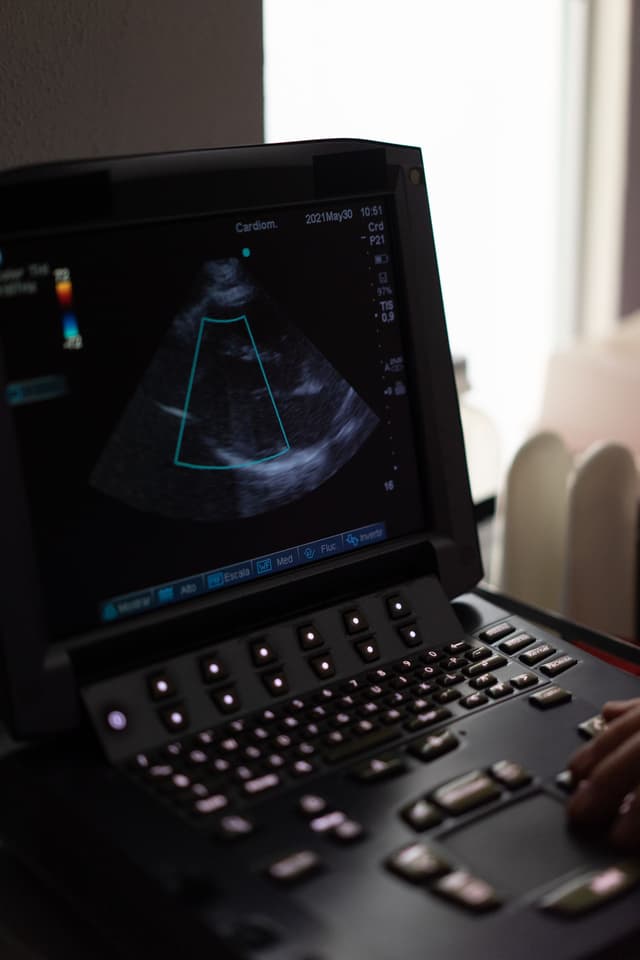 EchocardiographyAvailable in clinic
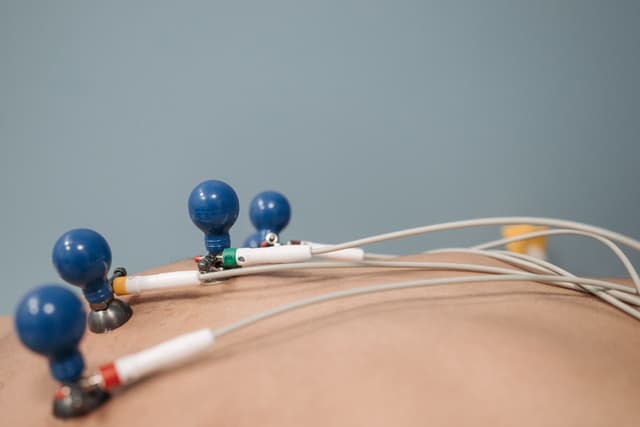 ECGAvailable in clinic
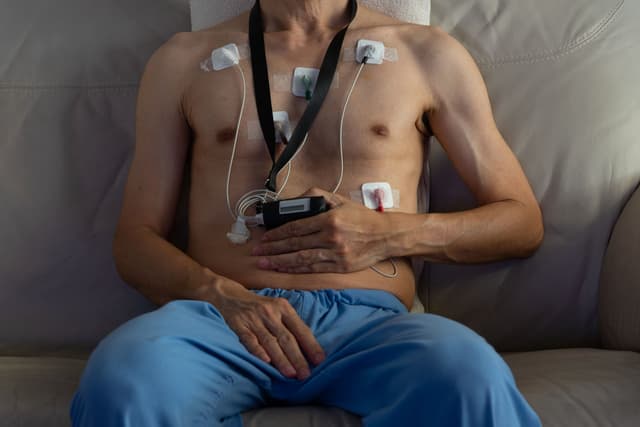 Holter monitoringAvailable in clinic
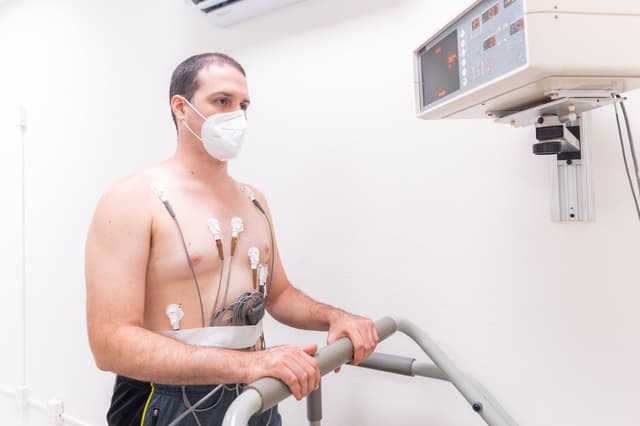 Stress testingAvailable in clinic
 Cardiac risk assessmentAvailable in clinic
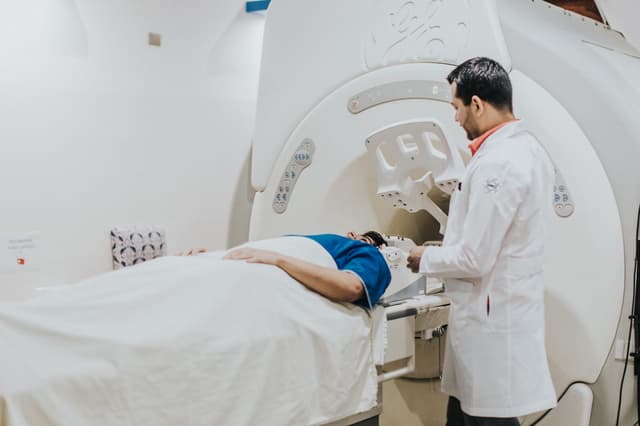 Cardiac MRIHospital referral
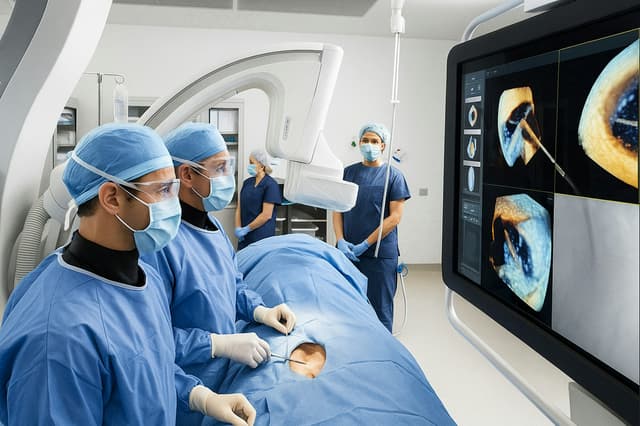 Coronary angiographyHospital referral
 Body composition analysisHospital referral
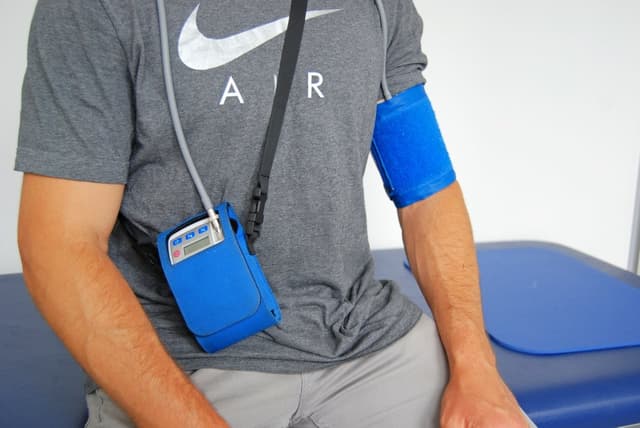 24-hour blood-pressure monitoringHospital referral
Not sure this is the test you need?
You do not have to decide alone. Book a consultation or send a question on WhatsApp. Tests are chosen once your symptoms and history have been reviewed.
This page explains what the test involves. It is not medical advice for your situation. If you have sudden or severe chest pain, fainting or breathlessness, seek emergency care immediately.