
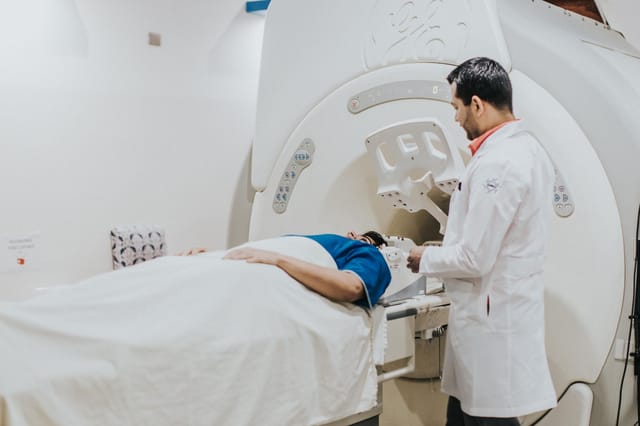
Kardiyak MRthe clearest view of the heart muscle.
Cardiac MRI uses a strong magnetic field and radio waves, not X-rays, to show the heart's structure, pumping, inflammation and scarring in fine detail.
Hastaneye sevk
At a glance
- How long
- 45–60 minutes
- Preparation
- Safety checklist first
- Results
- At a follow-up visit
- Where
- Hospital, by referral
Why it might be recommended
Every test is chosen to answer a specific question. These are the most common reasons for this one.
- Cardiomyopathy, or a thickened or enlarged heart muscle
- Suspected inflammation of the heart muscle (myocarditis)
- Heart failure where the cause is not yet clear
- Detailed assessment of the valves or of congenital heart conditions
What happens
Safety check
You answer questions about implants, devices and past surgery, and remove everything made of metal.
Positioning
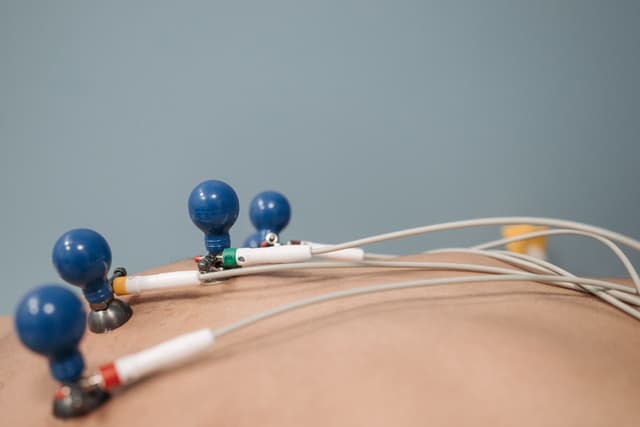
You lie on the table with ECG stickers and a light coil over your chest. Headphones protect you from the scanner's noise.
Scanning
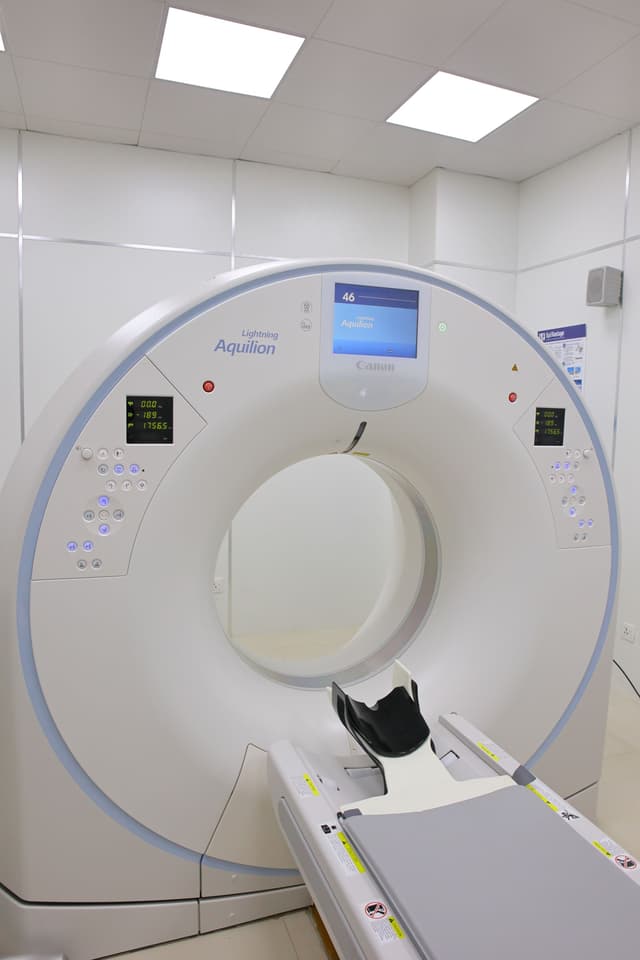
The table moves into the tunnel, and you are asked to hold your breath many times. A contrast injection is often given part-way through.
Review
The report comes back from the imaging centre and is explained at your follow-up appointment.
How to prepare
- Tell us about any pacemaker, defibrillator, metal implant, or metal fragments in the eyes
- Let us know if you are uncomfortable in enclosed spaces
- Wear clothes without metal, and leave jewellery at home
Conditions it helps assess
- Kalp yetmezliğiKalp kası olması gerektiği kadar iyi pompalamaz ya da dolmaz; bu yüzden vücut ihtiyacından azını alır.
- KardiyomiyopatiKalp kasının kendisinin hastalığı; kas kalınlaşabilir, genişleyebilir veya sertleşebilir.
- Kalp kapağı hastalığıKalbin dört kapağından biri tam açılmaz ya da düzgün kapanmaz.
Common questions
I have a pacemaker. Can I have an MRI?
Sometimes. Many modern devices are MRI-conditional, but this must be checked in advance. Always tell us about any implanted device.
Is it noisy?
Yes, the scanner makes loud knocking sounds. You are given ear protection and can talk to the radiographer throughout.
Does it use radiation?
No. MRI uses a magnetic field and radio waves, not X-rays.
Other tests
All tests


Not sure this is the test you need?
You do not have to decide alone. Book a consultation or send a question on WhatsApp. Tests are chosen once your symptoms and history have been reviewed.
This page explains what the test involves. It is not medical advice for your situation. If you have sudden or severe chest pain, fainting or breathlessness, seek emergency care immediately.