
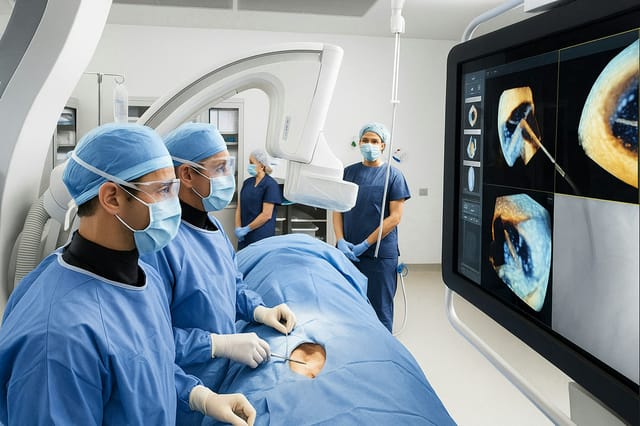
Koronarangiografiea direct look inside the heart's arteries.
A thin tube is passed from the wrist or groin to the heart, and dye shows the coronary arteries on X-ray. It is performed in a hospital catheter laboratory by an interventional team.
Überweisung ins Krankenhaus
At a glance
- How long
- 30–60 minutes, then recovery
- Preparation
- Fasting, as the hospital advises
- Results
- Shared after the procedure
- Where
- Hospital, by referral
Why it might be recommended
Every test is chosen to answer a specific question. These are the most common reasons for this one.
- Angina that continues despite treatment
- A stress test or CT scan suggesting significant narrowing
- Assessment before some kinds of heart surgery
- Confirming the anatomy when other tests disagree
What happens
Referral and consent
The reasons, risks and alternatives are discussed with you, and a referral is made to a hospital catheter laboratory.
In the cath lab
You stay awake, with local anaesthetic at the wrist or groin, while a thin catheter is guided to the heart.
Images
Contrast dye is injected into each coronary artery as X-ray pictures are taken. You may feel a warm flush.
Recovery and review
Pressure is applied to the entry site and you rest for some hours. The findings and next steps are then discussed with you.
How to prepare
- Follow the hospital's fasting instructions
- Ask in advance about blood thinners and diabetes medicines. Do not stop them unless you are told to
- Arrange for someone to take you home; you should not drive that day
Conditions it helps assess
Common questions
Is angiography the same as a stent?
No. Angiography takes the pictures. If a narrowing is found, treatment such as a stent is a separate decision made by the interventional team.
Is it painful?
The local anaesthetic stings briefly. Most people feel pressure rather than pain during the procedure.
What are the risks?
Serious complications are uncommon but real, which is why it is recommended only when the answer is expected to change your treatment. They are discussed with you before you agree.
Other tests
All tests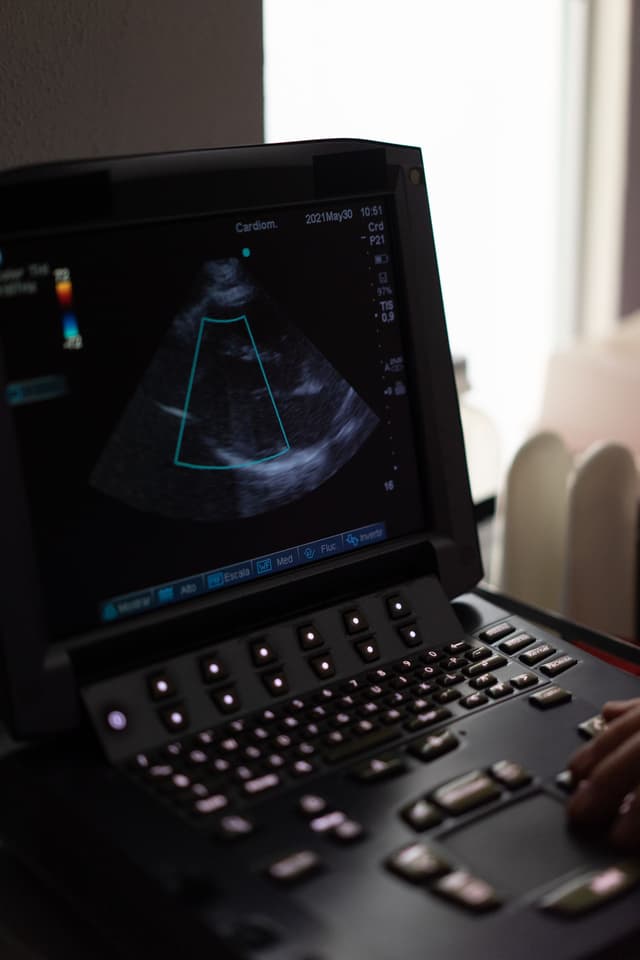 EchokardiografieIn der Praxis verfügbar
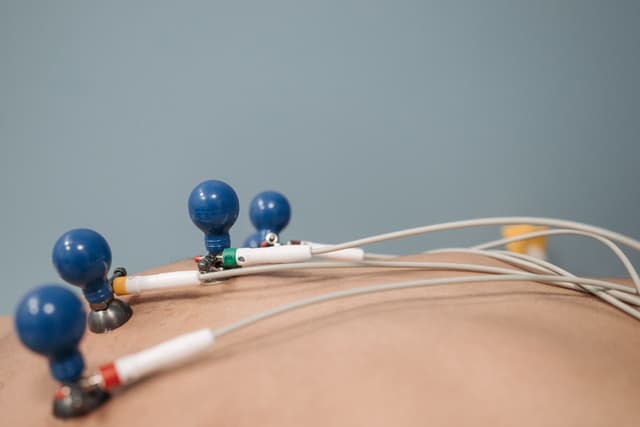 EKGIn der Praxis verfügbar
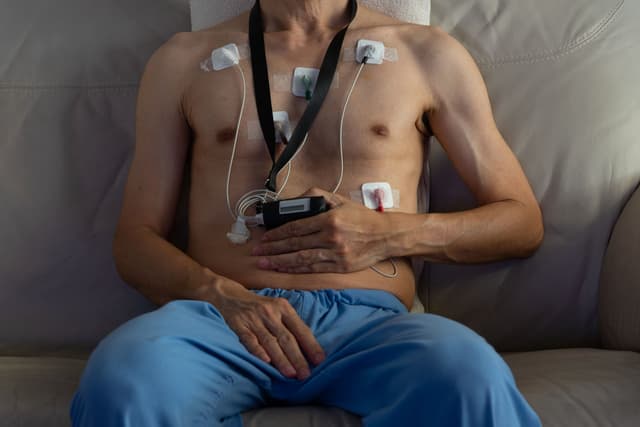 Langzeit-EKG (Holter)In der Praxis verfügbar
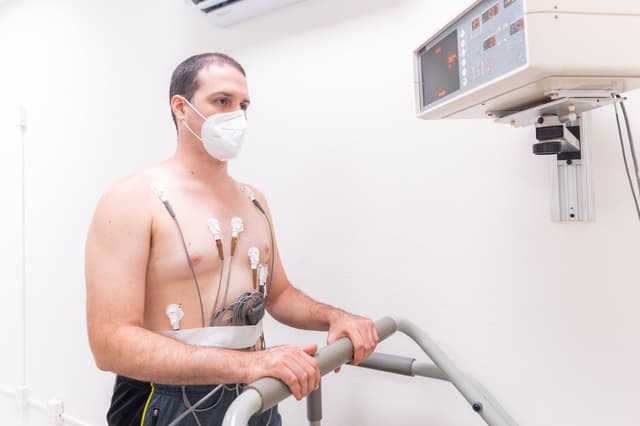 BelastungstestIn der Praxis verfügbar
 Kardiale RisikobewertungIn der Praxis verfügbar
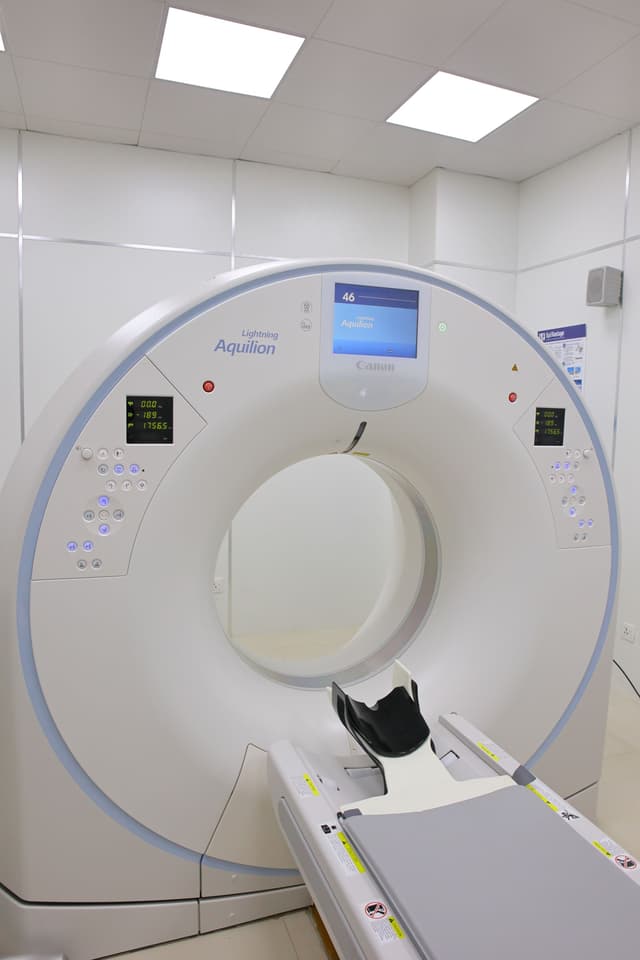 CT-BildgebungÜberweisung ins Krankenhaus
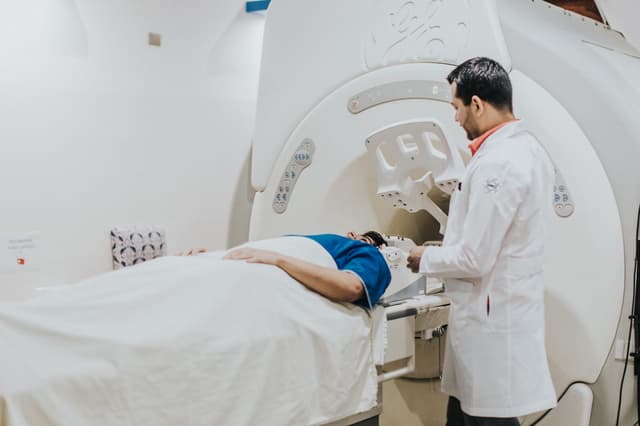 Kardio-MRTÜberweisung ins Krankenhaus
 Analyse der KörperzusammensetzungÜberweisung ins Krankenhaus
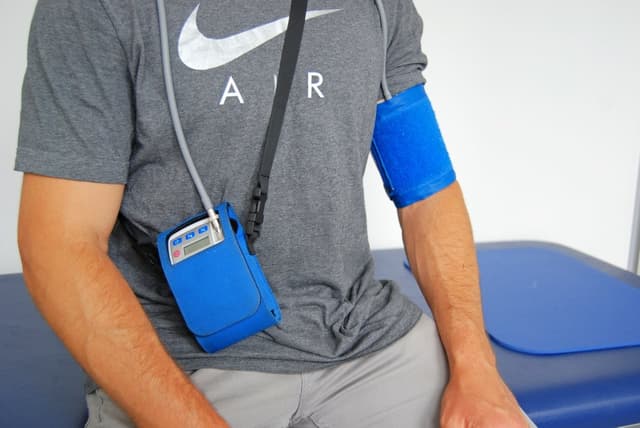 24-Stunden-BlutdruckmessungÜberweisung ins Krankenhaus
Not sure this is the test you need?
You do not have to decide alone. Book a consultation or send a question on WhatsApp. Tests are chosen once your symptoms and history have been reviewed.
This page explains what the test involves. It is not medical advice for your situation. If you have sudden or severe chest pain, fainting or breathlessness, seek emergency care immediately.