

Angina pectorischest discomfort that comes with effort.
Angina is chest discomfort that happens when the heart muscle briefly gets too little blood, usually because the coronary arteries are narrowed. It typically comes on with exertion and settles with rest. It is a warning worth acting on.
At a glance
- Often noticed as
- Chest tightness on exertion, easing with rest
- Confirmed with
- Your history, a stress test or a CT scan
- Aim of care
- Relieve symptoms and prevent a heart attack
- Followed up in
- Allgemeine Kardiologie
Symptoms
Symptoms vary from person to person, and some people have none. These are the most common.
- Chest tightness, pressure or heaviness on exertion
- Discomfort spreading to the arm, jaw, neck or back
- Breathlessness on exertion
- Symptoms brought on by cold, stress or a heavy meal
- Discomfort that eases within minutes of rest
Causes and risk factors
- Coronary artery disease, the most common cause
- High cholesterol and high blood pressure
- Smoking and diabetes
- A family history of early heart disease
- Less often, a narrowed aortic valve or thickened heart muscle
How it is diagnosed
The diagnosis starts with your history and an examination. These are the tests most often used to confirm it.
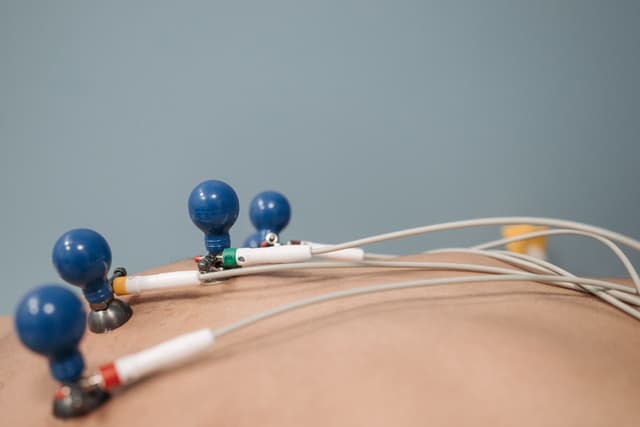
- EKGIn der Praxis verfügbar
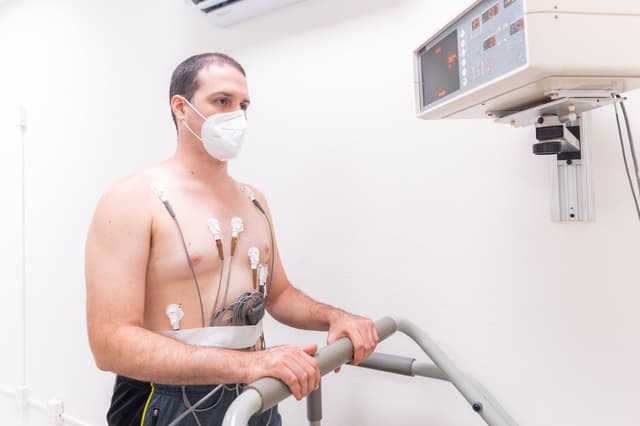
- BelastungstestIn der Praxis verfügbar
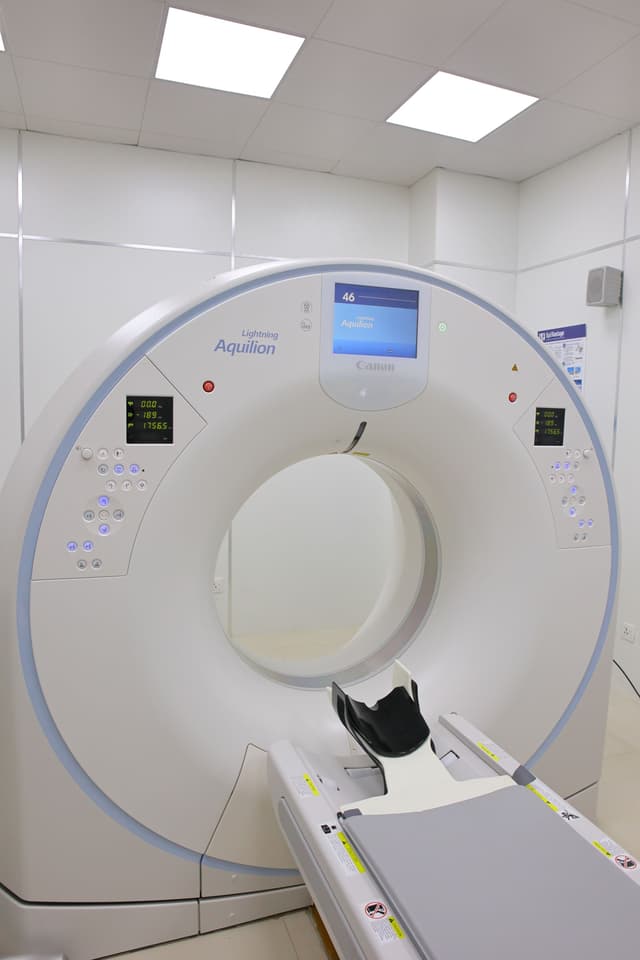
- CT-BildgebungÜberweisung ins Krankenhaus
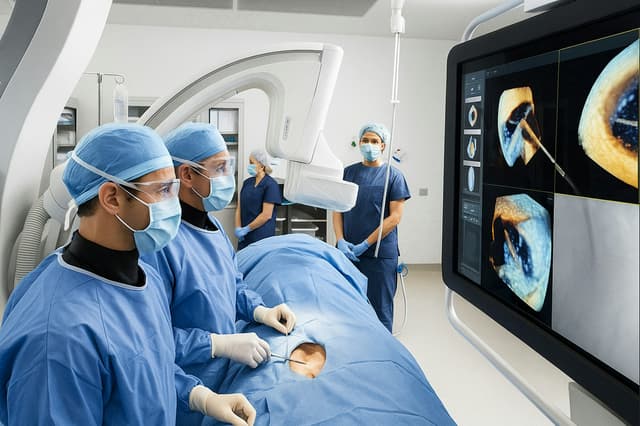
- KoronarangiografieÜberweisung ins Krankenhaus
How it is managed
Relief when it happens
A GTN spray or tablet under the tongue eases an attack within minutes.
Preventing attacks
Daily medicines reduce how often angina happens and let you do more before it starts.
Protecting the heart
Aspirin or a similar medicine, a statin and risk-factor control lower the risk of a heart attack.
Opening the artery, when needed
If medicines are not enough, angiography and a stent or bypass are arranged by referral.
General information, not a treatment plan. Your treatment is decided with you after an assessment.
Get emergency help now if you have
Call emergency services or go to the nearest emergency department. Do not wait for a clinic appointment.
- Chest pain lasting more than 15 minutes, or not easing with rest or GTN
- Chest pain that comes on at rest
- Chest pain with sweating, sickness or breathlessness
- Angina that is suddenly more frequent or more severe
Common questions
How is angina different from a heart attack?
Angina settles within minutes of rest. Pain that lasts longer than 15 minutes, or comes on at rest, may be a heart attack and needs emergency care.
Can angina be cured?
Symptoms can often be controlled completely with medicines or, when needed, a stent. The underlying artery disease is managed for life.
Should I stop exercising?
No. Regular, sensible exercise is good for angina. Your safe level is agreed after an assessment.
Other conditions
All conditions- HerzinsuffizienzDer Herzmuskel pumpt oder füllt sich nicht so gut, wie er sollte, sodass der Körper weniger erhält, als er braucht.
- VorhofflimmernEin unregelmäßiger, oft schneller Herzschlag, der in den Vorhöfen entsteht und das Schlaganfallrisiko erhöht.
- BluthochdruckDer Druck in den Arterien bleibt zu hoch. Er verursacht selten Beschwerden, belastet aber Herz und Gefäße auf Dauer.
- Erhöhtes CholesterinZu viel Cholesterin im Blut, das sich über viele Jahre in den Arterienwänden ablagern kann.
- Koronare HerzkrankheitDie Arterien, die den Herzmuskel versorgen, werden durch fetthaltige Ablagerungen verengt.
- KardiomyopathieEine Erkrankung des Herzmuskels selbst, der verdickt, gedehnt oder versteift sein kann.
- HerzklappenerkrankungEine der vier Herzklappen öffnet sich nicht vollständig oder schließt nicht richtig.
- HerzrhythmusstörungEin zu schneller, zu langsamer oder unregelmäßiger Herzschlag, verursacht durch eine Störung im elektrischen System des Herzens.
- Diabetes und HerzDiabetes erhöht das Risiko für Herz- und Gefäßerkrankungen, daher werden beide am besten gemeinsam behandelt.
Living with this, or worried you might be?
Book a consultation or send a question on WhatsApp. Your history, results and treatment are reviewed in person, and the plan is explained to you before you leave.
This page explains a condition in general terms. It cannot diagnose you or replace an examination, and it is not a treatment plan. Do not change or stop a medicine without talking to your doctor. If your symptoms are severe, sudden or happening now, seek emergency care immediately.