
Symptoms · Patient guide
Understanding chest pain
Chest pain has many possible causes. The description alone cannot tell you whether it is serious, but a few patterns should never wait for a routine appointment.
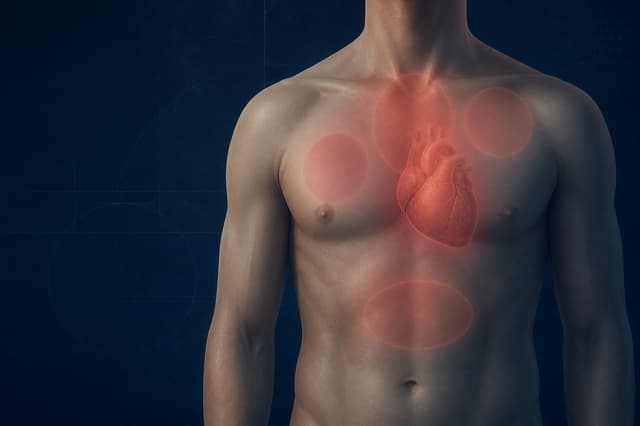
Chest pain now? Act on warning signs.
Call your local emergency service or go to the nearest emergency department now if the discomfort is new or severe, lasts more than a few minutes, keeps returning, or comes with breathlessness, sweating, nausea, faintness, or pain spreading to an arm, the back, neck, jaw or stomach.
What chest pain can mean
“Chest pain” can mean pressure, tightness, heaviness, burning, aching or a sharp pain. It may come from the heart, but it can also come from the lungs, food pipe and stomach, chest muscles, ribs, nerves, skin or anxiety.
That range is why it is unsafe to diagnose the cause from one feature—such as where the pain is, whether it is sharp, or whether you are young. A clinician combines the story with your risk factors, examination and, when needed, tests.
When chest pain needs urgent help
Seek emergency assessment rather than waiting for a clinic appointment when chest discomfort:
- is sudden, severe, persistent, or different from anything you have felt before
- feels like pressure, squeezing, fullness or a heavy weight in the centre of the chest
- spreads to one or both arms, the back, neck, jaw or upper abdomen
- comes with shortness of breath, a cold sweat, nausea, lightheadedness or fainting
- starts at rest, becomes less predictable, or is getting more frequent or intense
Heart-attack symptoms are not always dramatic. They can begin slowly and may come and go. If you are unsure, treat the situation as urgent.
Patterns a clinician will consider
These patterns can guide an assessment, but none can confirm or exclude a diagnosis on its own.
Pressure with exertion
Discomfort brought on by walking uphill, stairs, cold air or emotional stress—and relieved by rest—can be consistent with angina.
Pain linked to movement
Pain that follows a strain or changes with a particular movement may arise from the chest wall, muscles or ribs.
Burning after food
Burning behind the breastbone after meals or when lying down can occur with acid reflux, which can feel similar to cardiac pain.
Sharp pain with breathing
Pain made worse by a deep breath can have several causes, including inflammation around the lung or heart, and sometimes a blood clot in the lung.
A familiar-looking pattern can still be serious. Do not use this list to rule out a heart or lung emergency.
Five details worth noticing
If it is safe to do so, note these details. They help a clinician understand the pattern more quickly:
- 01What were you doing when it started?
- 02Where is it, and does it spread anywhere?
- 03What does it feel like—pressure, burning, sharpness, heaviness or something else?
- 04How long does it last, and how often does it happen?
- 05What makes it better or worse, and are there other symptoms?
How chest pain is assessed
The first step is deciding whether there may be an immediate threat to the heart, lungs or major blood vessels. In an emergency setting, assessment often begins with vital signs, an examination and an ECG. Blood tests such as troponin may be repeated because changes over time matter.
Not every person needs every test. The next step depends on the pattern, examination, age and risk factors such as smoking, diabetes, high blood pressure, high cholesterol, kidney disease and family history.
- ECG
- Blood tests
- Chest imaging when indicated
- Echocardiogram or stress testing in selected cases
- Coronary CT or angiography when clinically appropriate
Pain that is not an emergency still deserves an explanation.
Arrange a cardiology review if discomfort is recurring, appears with exertion, or worries you—even if it settles. If symptoms are happening now or have become severe, use emergency services instead of booking.